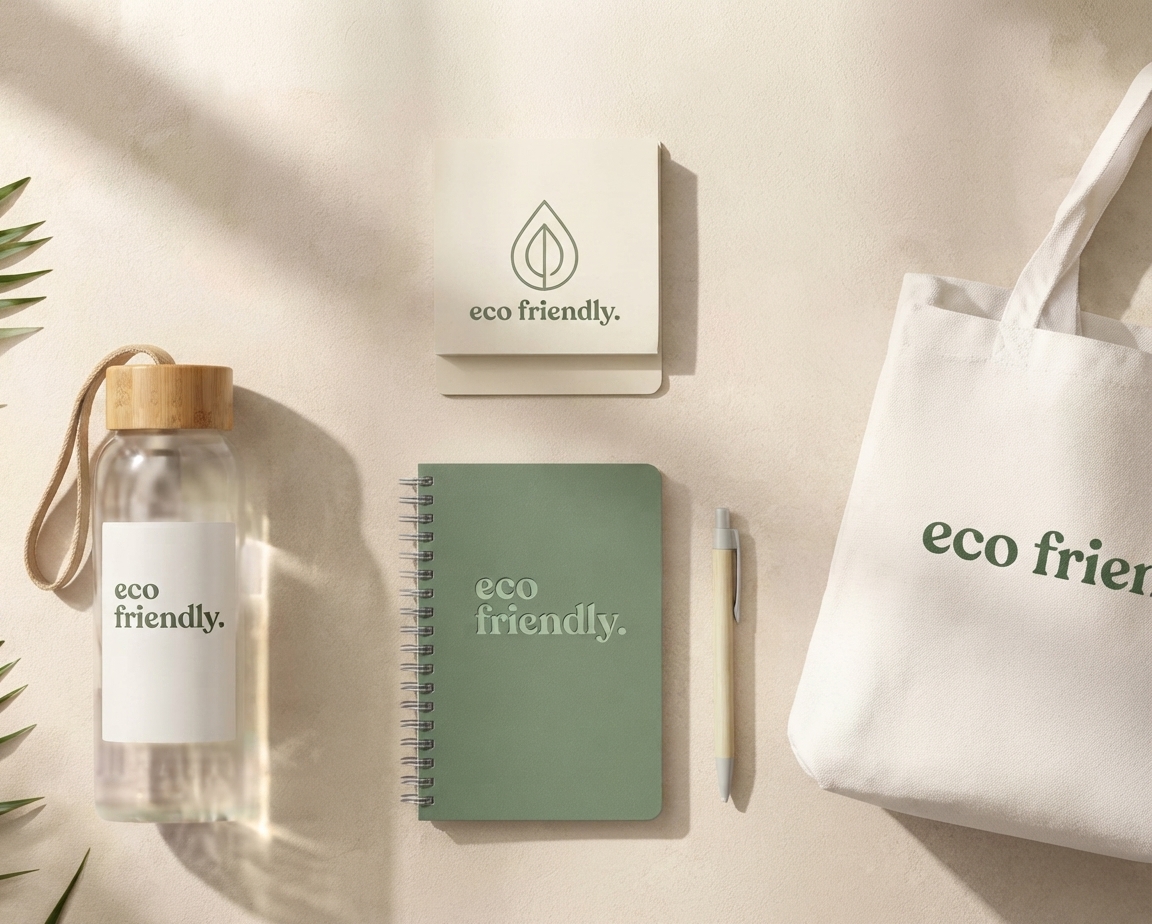
Choosing eco-friendly promotional products is not as simple as finding an item with a leaf icon on the packaging.
For businesses, nonprofits, schools, healthcare organizations, event teams, and corporate buyers across the United States, the better question is: Will this product actually be useful, will people keep it, and can its environmental claims be supported?
A reusable bottle that stays in someone's routine for years can make more sense than several inexpensive giveaways that are quickly discarded. A recycled-material tote may be a good choice when its material content is documented and the bag is sturdy enough for repeated use. Even packaging, decoration, shipping, and order quantity can affect how responsible a promotional program really feels.
The goal is not to find a promotional product with a perfect environmental story. Very few physical products have one. The goal is to make better-informed choices about materials, durability, usefulness, packaging, and the claims your organization makes about them.
Businesses looking for options can start by browsing Trendy Promo's product categories, then compare the exact materials and specifications for the products that fit their audience.
Key Takeaways
Choose useful promotional products before focusing on environmental labels.
Ask for documentation when a product includes recycled, organic, FSC-certified, RPET, bamboo, cork, or other sustainability-related claims.
Consider durability because a product that lasts longer may provide more value than several disposable giveaways.
Evaluate the complete product, including decoration, packaging, accessories, care requirements, and shipping.
Avoid broad environmental claims when a more specific material statement is available.
Match products to the audience instead of assuming one sustainable giveaway works for every campaign.
Order realistic quantities to reduce excess inventory and unnecessary waste.
Start With Fewer, Better, More Useful Products
A responsible promotional product strategy starts before material selection.
It starts with deciding whether the product is worth producing in the first place.
When teams plan a trade show, employee program, client gift, conference, or community event, it can be tempting to order the largest quantity possible simply because the per-unit price becomes lower. That may look efficient on a spreadsheet, but unused inventory does not create brand value.
Start with the recipient.
What would this person realistically use after the event is over?
A commuter may appreciate a reusable bottle or insulated tumbler. An employee who works from different locations might use a durable backpack, notebook, or charging accessory. An event attendee may get more value from one well-made tote than from a bag filled with inexpensive items they never requested.
Think about the product's likely role in everyday life. The strongest promotional products usually solve a small, ordinary problem: carrying something, drinking something, organizing a desk, taking notes, charging a device, packing lunch, or traveling.
That is also why product quality matters. A promotional item has to earn its place in someone's routine.
If you are building a larger merchandise strategy rather than a single campaign, our guide to custom merchandise for brand growth explains how product selection, quality, proofing, and distribution can work together.
Understand What Eco-Friendly Product Claims Actually Mean
Words such as recycled, recyclable, reusable, organic, bamboo, cork, FSC-certified, RPET, and biodegradable describe different things. They should not be treated as interchangeable.
A recycled product contains some amount of material that has been recovered and used again. The percentage and source of that material may vary.
A recyclable product may be technically capable of being recycled, but whether a recipient can actually recycle it depends on the material, product construction, and recycling options available in their area.
Reusable simply means the item is designed to be used more than once. Reusability alone does not describe where the material came from.
Bamboo and cork describe materials, but their presence does not automatically make every product containing them environmentally preferable.
FSC certification relates to forest-based materials and supply-chain standards. The certification scope should be checked for the exact product rather than assumed across an entire category.
RPET generally refers to recycled polyethylene terephthalate, a material commonly produced using recovered PET plastic. It can appear in bags, apparel, accessories, and other promotional products.
The practical takeaway is simple: look beyond the headline claim.
If recycled content is important to your campaign, ask what percentage of the relevant component contains recycled material. If certification matters, confirm which component is certified. If packaging is described as recyclable, check what material it uses.
Specific information is more useful than a vague green label.
How to Word Eco Claims Under the FTC Green Guides
The FTC Green Guides (16 CFR Part 260) set the rules for environmental marketing claims in the U.S., and they apply to the card in the box as much as to your website.
Skip unqualified "eco-friendly" or "green." Name the specific benefit instead: "made with recycled polyester."
Quantify recycled content. If only part of the item is recycled, say how much, for example "bag body made with 50% recycled PET," using the supplier's documentation.
Be careful with "recyclable." An unqualified recyclable claim needs recycling programs available to a substantial majority of people where the item is sold, which the Guides describe as about 60%. Otherwise qualify it.
Keep the proof on file. Ask for the certificate or test report before you print the claim.
Read the FTC Green Guides page for the full text.
Best Eco-Friendly Promotional Products to Consider
There is no single "most sustainable" promotional product for every organization. The better choice depends on the audience, intended use, quantity, budget, and available product documentation. If domestic production matters as much as materials, see our Made in USA buying guide.
Here are several categories worth comparing.
1. Reusable Water Bottles and Tumblers
Drinkware works well because it fits naturally into everyday routines. Reusable water bottles with your logo are the obvious example.
Reusable bottles and tumblers can be used at work, during travel, at events, in schools, at gyms, and at home. Options may incorporate recycled materials, stainless steel, glass, or other materials depending on the product.
When comparing drinkware, look beyond the exterior.
Check:
Capacity
Lid style
Leak or spill claims
Care instructions
Material composition
Decoration area
Packaging
Replacement lid availability where applicable
A bottle that is frustrating to clean or difficult to carry may not stay in use, regardless of its material story.
Browse Trendy Promo's eco-friendly drinkware to compare reusable bottles, tumblers, and other branded drinkware options.
2. RPET Tote Bags and Backpacks
Bags can provide a practical way to introduce recycled materials into a promotional campaign. Cotton and canvas tote bags are the simplest place to start.
RPET totes are commonly used for conferences, employee programs, retail events, community campaigns, and branded merchandise kits. Backpacks and travel bags can work for higher-value programs where longer-term use matters.
Before choosing a bag, review more than the recycled-content statement.
Check the handles, stitching, zipper quality, interior organization, fabric weight, size, and intended carrying capacity. A durable bag that receives repeated use is usually more valuable to the recipient than a lightweight bag that is quickly replaced.
For event programs, a tote should also be easy to carry for several hours without becoming uncomfortable.
You can compare eco-friendly bags including branded totes, backpacks, and other reusable carrying options.
3. Recycled or Certified-Paper Notebooks
Notebooks remain useful for conferences, employee onboarding, meetings, training programs, and client kits.
Some options use recycled paper, certified paper sources, kraft-style covers, cork details, recycled fabrics, or combinations of different materials.
When comparing notebooks, check both the cover and the paper. A sustainability claim may apply to one component but not necessarily the entire item.
Also consider how the notebook will actually feel to use. Paper quality, binding, size, page count, pen compatibility, and cover durability often matter more to the recipient than the marketing description.
4. Reusable Lunch and Food-Storage Products
Lunch containers, reusable utensil sets, food-storage accessories, and insulated lunch bags can work particularly well for employee wellness programs, schools, outdoor events, and onboarding kits.
These products benefit from being connected to an obvious everyday activity.
Review food-contact information, care instructions, temperature limitations, materials, closures, and packaging for the exact product being considered.
A reusable item should also be convenient. If something is difficult to wash, store, or transport, recipients may stop using it even when the material itself sounds appealing.
5. Promotional Apparel With Documented Materials
Apparel gives organizations another opportunity to consider material sourcing and product longevity.
Depending on the garment, options may include recycled polyester, organic cotton, responsibly sourced fibers, or blends incorporating recycled content.
But fabric claims are only part of the decision.
A shirt, quarter-zip, jacket, hoodie, or hat has to fit well and feel comfortable enough to be worn voluntarily. Apparel that stays in a closet does very little for either the recipient or the brand.
Pay attention to sizing, fabric weight, care requirements, stitching, decoration method, and intended setting.
Browse eco-friendly apparel to compare branded clothing options with sustainability-focused materials and features.
If you are planning a larger apparel order, the bulk custom apparel with logo guide covers product selection and ordering considerations in greater depth.
6. Bamboo, Cork, and Natural-Material Accessories
Bamboo and cork are visually distinctive materials often used in notebooks, pens, desk accessories, kitchen items, coasters, charging accessories, and gift sets.
These materials can give a promotional product a warm, natural appearance, but buyers should still evaluate the entire construction.
For example, a bamboo-faced product may also contain plastic, electronics, adhesives, metals, or other components.
That does not automatically make the product a poor choice. It simply means the environmental story should describe the product accurately rather than treating one visible material as proof that the whole item is sustainable.
7. Tech Accessories Designed for Continued Use
Technology products may not be the first category people associate with eco-conscious promotional products, but usefulness and longevity still matter.
A reliable wireless charger, charging cable, power bank, or desk accessory that remains in use can provide more lasting utility than multiple novelty giveaways.
Some tech products also incorporate recycled plastics, recycled fabrics, FSC-certified packaging, bamboo details, or other documented material choices.
For electronics, specifications matter. Review device compatibility, charging standards, included accessories, capacity, safety information, warranty where offered, and supplier documentation before making claims.
Explore Trendy Promo's eco-friendly tech products for branded technology accessories that may fit sustainability-focused campaigns.
Certifications worth asking for
Label | What it covers | Typical products |
|---|---|---|
GRS or RCS | Recycled content tracked through the supply chain | rPET totes, recycled polyester apparel |
FSC | Wood and paper from certified or controlled sources | Notebooks, paper packaging, wood items |
OEKO-TEX Standard 100 | Textiles tested for harmful substances | Apparel, blankets, bags |
A certification covers what it names and nothing more. An FSC notebook cover does not make the pen in the pocket eco-friendly.
Durability Is Part of the Sustainability Conversation
Material selection attracts most of the attention, but durability deserves equal consideration.
Imagine two promotional bags.
The first contains recycled material but has weak stitching and a zipper that fails after several uses. The second uses a different material but is built well enough to remain in service for several years.
Looking only at the material label misses an important part of the picture.
A long useful life reduces the need for replacement and gives the recipient more value from the product. That does not mean durability automatically makes an item environmentally superior, but it should be part of the purchasing decision.
Before placing a significant order, inspect:
Seams and stitching
Handles and straps
Zippers and closures
Hinges and moving parts
Surface finishes
Washability
Care instructions
Warranty information when offered
Replacement components when available
For higher-value orders, requesting a sample before production can also help you judge the actual product instead of relying entirely on catalog photography.
Think About End of Life Before Making Recycling Claims
The end of a product's useful life is often more complicated than the product description suggests.
A notebook may combine paper, metal binding, fabric, adhesives, and synthetic cover materials. A bottle may include a stainless-steel body, plastic lid, silicone seal, and coating. A backpack may combine several fabrics, foam, zipper hardware, thread, and labels.
Mixed-material products can be difficult to separate.
Recycling systems also vary across the United States. An item accepted in one municipality may not be accepted in another.
For that reason, avoid giving recipients broad disposal instructions unless they are accurate for the specific product and situation.
If you provide care or end-of-life guidance, keep it practical and precise.
Decoration Can Affect the Final Product
Your logo is only one part of the product, but decoration should still be considered when evaluating an eco-friendly promotional item.
Common decoration methods include screen printing, embroidery, laser engraving, heat transfer, pad printing, debossing, and digital printing.
The appropriate method depends on the product material, artwork, order quantity, and supplier capabilities.
The goal should be decoration that holds up through normal use without making the item unnecessarily difficult to use or care for.
In many cases, restrained branding also creates a more desirable product.
A small embroidered logo on a quality bag or a subtle laser engraving on drinkware can feel more natural than covering the entire item with promotional messaging.
When recipients like the appearance of the product, they are more likely to keep using it.
Do Not Forget About Packaging
Packaging is easy to overlook because buyers naturally focus on the item being decorated.
But oversized boxes, unnecessary plastic sleeves, extra inserts, excessive filler, and complicated presentation packaging can add material to a campaign without adding much value.
That does not mean all packaging should be eliminated.
Packaging protects merchandise during production, storage, and shipping. Damaged products that require replacement create another problem entirely.
Instead, look for the right balance.
Ask:
Is the package appropriately sized for the product?
Is every component necessary?
Can excess filler be reduced?
Does the product already have protective packaging?
Is individual packaging necessary for the distribution method?
Can multiple items be packed efficiently when building kits?
For client gifts, presentation may still matter. The objective is thoughtful packaging rather than excessive packaging.
Order Quantities Matter More Than Many Buyers Realize
One of the simplest ways to reduce unnecessary promotional merchandise is to improve quantity planning. Often the greenest choice is not ordering the item at all, and the anti-swag guide lists what to stop buying.
Avoid automatically ordering thousands of additional units just because the next price break looks attractive.
Start with:
Expected recipient count
Confirmed event attendance
Employee population
Planned future uses
Reasonable replacement quantities
Storage capacity
A modest overage may be sensible for replacements or late additions. A warehouse full of products with an outdated campaign date is not.
Evergreen branding can also help when appropriate.
A product printed with a company logo may remain useful for future events, while merchandise containing a specific year, campaign slogan, or one-time event date has a much shorter reuse window.
Match the Product to the Program
Eco-friendly promotional products work best when they fit the reason they are being given.
Trade Shows and Conferences
Favor portable, useful products attendees can comfortably carry. Reusable totes, notebooks, drinkware, and compact accessories can work well.
Employee Welcome Kits
Choose items that support the employee's daily routine. Drinkware, notebooks, apparel, lunch accessories, or useful desk products can create a cohesive kit without filling a box with unnecessary pieces.
Client Appreciation
Quality and presentation become more important when the product represents an established business relationship. A carefully selected sustainable gift may be more memorable than a larger collection of lower-value items.
For additional inspiration, see our guide to 10 Best Corporate Gifts for Client Appreciation.
Community and Nonprofit Programs
Select products that connect naturally to the mission and audience. A useful product with a clearly documented material story often communicates more effectively than exaggerated environmental messaging.
Company Events
Consider where the event is taking place, how products will be distributed, and whether attendees will realistically use the item afterward.
How to Communicate Sustainability Without Greenwashing
Good environmental messaging is usually specific and restrained.
If a supplier documents that a bag contains a stated percentage of recycled polyester, describe that fact.
If the paper in a notebook carries a particular certification, identify the certified component.
If packaging uses recycled content, describe the packaging rather than implying the entire product is made from recycled material.
Avoid turning a limited product attribute into a sweeping statement about environmental impact.
Phrases such as:
“Made with recycled polyester”
or
“Includes FSC-certified paper”
provide buyers and recipients with something concrete.
Broad phrases such as:
“100% sustainable”
“planet safe”
“zero impact”
require much more support and can easily communicate more than the product documentation actually establishes.
Specific language is not only safer-it tends to sound more credible.
Questions to Ask Before Ordering Eco-Friendly Promotional Products
Before approving a product, ask your supplier or promotional products partner:
What material claim applies to this exact product?
What percentage of recycled content is documented?
Which components are covered by the certification?
What other materials are used in the product?
What decoration methods are available?
How durable is the product for its intended use?
What care instructions apply?
How is the product packaged?
Is a sample available?
What is the minimum order quantity?
What is the production timeline?
Can unused packaging components be reduced?
What documentation supports the environmental claims?
These questions make it easier to compare products on more than appearance or price.
If you have questions about artwork, virtual proofs, order minimums, production, or shipping, visit the Trendy Promo FAQ for additional ordering guidance.
How Trendy Promo Approaches Eco-Friendly Promotional Products
There is no reason to make sustainable product sourcing more complicated than it needs to be.
Start with your audience, quantity, budget, delivery date, and the type of product you believe recipients will genuinely use.
From there, compare a focused group of options rather than searching through thousands of unrelated items.
Trendy Promo helps organizations source branded merchandise across a wide range of product categories, including recycled-material products, reusable items, certified-paper products, drinkware, bags, apparel, office accessories, and other sustainability-minded options.
Product specifications vary, so material and certification claims should always be verified for the exact item being ordered.
Our goal is straightforward: help you choose branded merchandise that makes sense for your campaign, looks professional with your logo, and arrives with the information you need to make an informed decision.
Browse our full range of product categories to begin comparing options, or contact Trendy Promo if you would like help narrowing down products for your project.
Frequently Asked Questions
What are the best eco-friendly promotional products for businesses?
The best choice depends on the audience, but reusable drinkware, recycled-material totes, notebooks using documented paper sources, useful desk accessories, selected apparel, lunch products, and long-lasting everyday items are good categories to compare. Usefulness and durability should be considered alongside material claims.
What does RPET mean in promotional products?
RPET generally refers to recycled polyethylene terephthalate. It is commonly associated with material produced using recovered PET plastic and can be used in bags, apparel, accessories, and other products. Check the specifications for the exact item to understand how much recycled material it contains.
Are bamboo promotional products eco-friendly?
Bamboo can be one component of a sustainability-minded product, but the presence of bamboo alone does not describe the environmental impact of the entire item. Review the full material composition, construction, packaging, expected life, and supplier documentation.
Are reusable promotional products always better?
Not necessarily. Reusability is valuable when recipients actually continue using the item. Product quality, audience fit, durability, care requirements, materials, and quantity all influence whether a reusable product makes sense.
What should I look for in recycled promotional products?
Look for a clearly documented recycled-content claim, the percentage of recycled content when available, information about which components contain recycled material, product durability, packaging, decoration options, and care instructions.
Can my company logo be added to eco-friendly promotional products?
Yes. Decoration options vary depending on the product and material. Methods may include screen printing, embroidery, laser engraving, heat transfer, debossing, pad printing, or digital decoration. Review a virtual proof before production to confirm logo placement and appearance.
How can businesses avoid greenwashing in promotional products?
Use specific claims supported by product documentation. Describe the actual material, certification, or recycled-content attribute rather than using broad phrases that suggest the whole product has little or no environmental impact.
Are eco-friendly promotional products available for bulk orders?
Many are. Minimum quantities depend on the product, supplier, and decoration method. Bulk pricing may change at different quantity levels, so compare the complete delivered cost rather than selecting products only by the lowest unit price.
What eco-friendly promotional products work well for employee gifts?
Useful items such as reusable drinkware, notebooks, selected apparel, lunch accessories, totes, backpacks, and desk products can work well. The best mix depends on how employees work and what they are likely to use regularly.
What eco-friendly promotional products are good for trade shows?
Portable items tend to work best at trade shows. Reusable totes, compact notebooks, drinkware, writing instruments, and small useful accessories can be easier for attendees to carry and more likely to remain useful after the event.
Make Your Next Promotional Order More Intentional
Sustainable promotional merchandise does not have to mean chasing the latest material trend or adding a green label to an ordinary giveaway.
A better approach is to slow down at the product-selection stage.
Choose something useful. Check how it is made. Review the documented material claims. Think about durability. Look at the packaging. Order a quantity you can realistically distribute. Then communicate what you know without exaggerating what you do not.
That creates a stronger promotional program and a more credible brand experience.
Explore our product categories based on your audience, budget, quantity, and campaign goals, or contact Trendy Promo for help finding the right products for your next project.