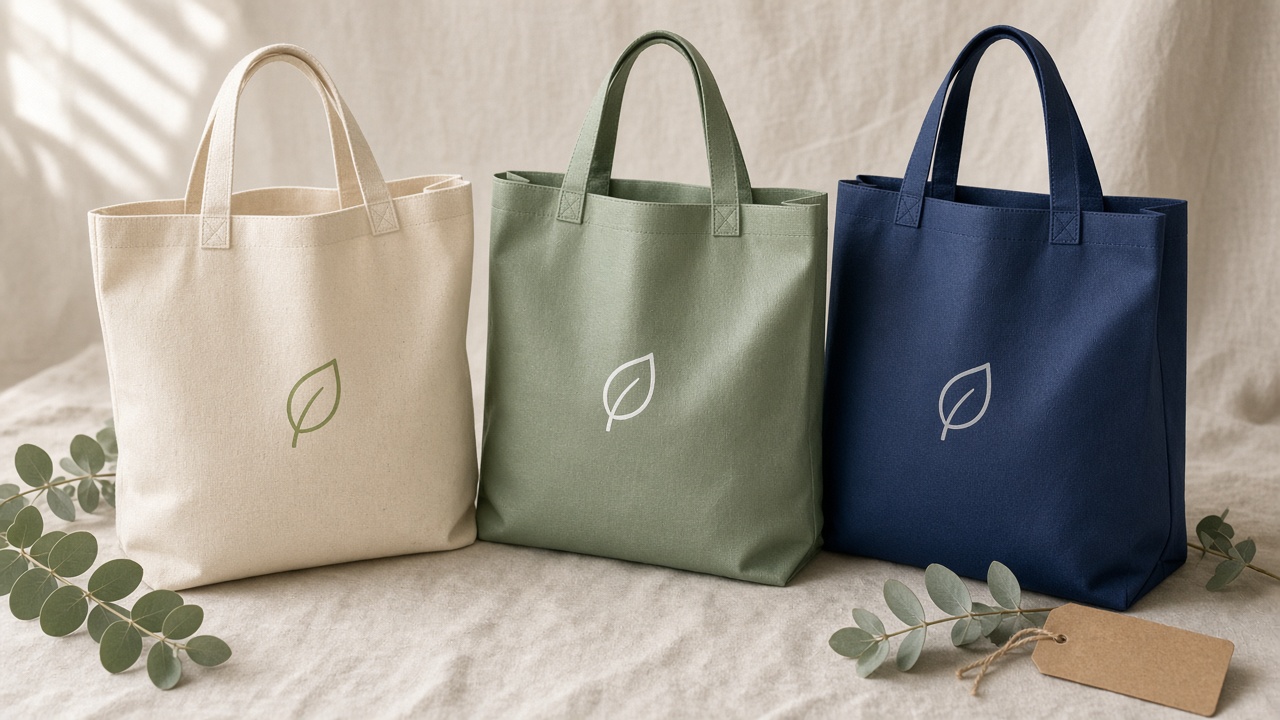
Eco-friendly tote bags all look green in a product photo. The difference shows up a few months later, when one bag is still carrying groceries every Saturday and another has quietly gone into the trash. The material decides most of that. Canvas, recycled PET and non-woven polypropylene each have a real place in a promotional program, but they are not interchangeable, and picking the wrong one is the fastest way to turn a sustainability message into a mixed one.
We talk with buyers about this every week. A conference planner wants something light that every attendee will take home. A marketing team wants a custom tote bag that feels good enough to hand to clients. A nonprofit wants a bag that matches its values and can be explained honestly to donors. All three say "eco-friendly," and all three need a different answer.
This guide compares the materials side by side, in plain language. We cover how each fabric feels in the hand, how long it lasts, which decoration methods suit it (screen print, heat transfer, embroidery and full color), what the eco claims actually mean, which certifications to ask about, and what happens to the bag at the end of its life. Then we match materials to events and audiences with a few illustrative scenarios, and finish with care instructions you can pass along to the people who receive the bags.
A quick note on scope. This page is about choosing the fabric. If your main question is what a tote order will run you, our separate guide on how much custom tote bags cost covers that in detail, so we will not repeat it here. And if you are still deciding whether a tote is even the right bag, the comparison of promotional tote bags vs custom backpacks will help you settle that first.
If you want to browse while you read, the full tote bags collection sits inside our bags and totes category, and many styles are tagged as eco-friendly on the product page.
Canvas vs recycled PET vs non-woven at a glance
Here is how the three main materials compare on the things buyers ask about most. Jute and recycled cotton get their own short section further down.
Canvas and cotton | Recycled PET (rPET) | Non-woven polypropylene | |
|---|---|---|---|
Made from | Cotton fiber, conventional or organic | Polyester spun from recycled plastic, often bottles | Polypropylene fibers bonded with heat, not woven |
Feel | Soft to stiff depending on weight; natural texture | Smooth, slightly sporty; heathered styles look like fabric | Light, papery, a little crisp |
Durability | High in heavier weights; seams and handles last | High; resists tearing and moisture | Moderate; fine for regular light use, wears at handles over time |
Best decoration | Screen print, embroidery, heat transfer, full color transfer | Screen print, heat transfer, sublimation on light colors, embroidery on heavier weaves | Screen print; laminated styles for full color |
Eco story | Natural, renewable fiber; organic options avoid synthetic pesticides | Gives existing plastic a second life | Lightweight, reusable, recyclable where #5 plastic is accepted |
Cert to ask about | GOTS or OCS for organic; OEKO-TEX for safety | GRS or RCS for recycled content | Recycled content claims, if any, backed by GRS |
Best for | Client gifts, retail, staff, everyday carry | Outdoor events, sports, commuters, wet climates | High volume giveaways, trade shows, grocery promotions |
None of these is the "best" eco-friendly tote bag in every case. The greenest bag is the one that gets reused the most, so the right material is the one your audience will actually keep using.
Canvas and cotton tote bags
Cotton is the material most people picture when they hear "tote bag." Canvas is simply a tightly woven, heavier cotton fabric. You will see cotton totes described by weight in ounces: lighter fabrics feel like a grocery bag, while heavier canvas holds its shape, stands up on a table and feels like something you would buy in a shop.
Durability and feel
A well sewn canvas tote is one of the longest lasting bags in promotional products. The weave resists tearing, the handles are usually stitched rather than heat sealed, and the fabric softens with use instead of cracking. Cotton absorbs water, and lighter weights can wrinkle and lose shape. If people will load it with books, laptops or groceries, choose a heavier canvas with reinforced handle seams.
Decoration fit
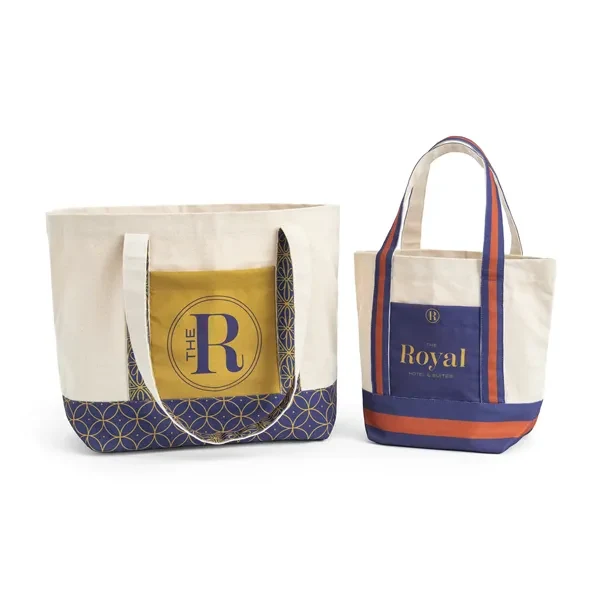
Cotton is the most flexible fabric for decoration. Screen printing gives crisp, durable spot colors on natural canvas. Embroidery looks especially good on heavier weights and reads as premium. Add a name or initials and a personalized canvas bag becomes a gift people keep. Heat transfers and digital transfers handle full color artwork and gradients well. Some styles mix materials: the Heavyweight Canvas Small Tote pairs cotton canvas with a full color printed RPET pocket and straps, which lets you show a detailed design without printing it across the whole bag.
Organic cotton and certifications
Organic cotton is grown without synthetic pesticides and fertilizers. To know a claim is real, ask whether the fabric is certified to GOTS (Global Organic Textile Standard), which covers the organic fiber and processing through the supply chain, or OCS (Organic Content Standard), which verifies organic content. OEKO-TEX Standard 100 is a separate label that tests finished textiles for harmful substances. It is not an organic certification, but it is a useful one to ask about for any cotton bag.
Conventional cotton is still a natural, renewable fiber, but it is generally water and resource intensive to grow. Lifecycle studies have often found that a cotton bag needs to be reused many times to beat a single use bag on environmental impact. The answer is a cotton tote people will carry for years.
Real example: organic cotton for a premium client gift
DataArt, a global software engineering firm, came to us needing a client appreciation kit on a rushed timeline, and the order was below the usual minimum for the items they wanted. We filled it. The bag they chose was the FEED Organic Cotton Weekend Tote in navy: 25 totes, produced on rush. The product listing describes it as 12 oz GOTS certified organic cotton with copper rivets, which gave the kit a heavy, retail quality bag with a sustainability story the recipients could see and feel. For a client gift, the bag is the first thing people touch when they open the kit, and organic cotton signals care without a speech about it.
Recycled PET tote bags (rPET)
Recycled PET tote bags are made from polyester that has been spun from recycled plastic, most often post-consumer bottles. The result looks and behaves like regular polyester fabric. You will see it described by denier, such as 300D or 600D, where a higher number means a thicker, tougher yarn.
Durability and feel
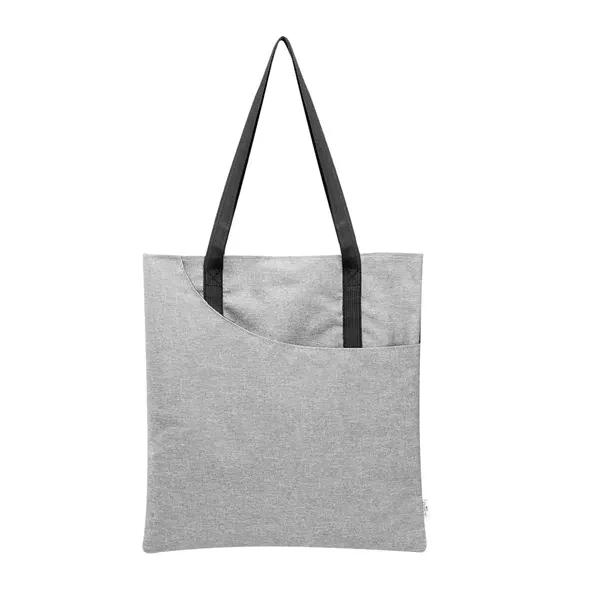
rPET is strong, light and shrugs off moisture far better than cotton. It does not wrinkle much and wipes clean easily, a practical choice for outdoor events and commutes. Heathered rPET, like the Swoop Heathered rPET Tote Bag in 300D recycled polyester, has a textured look that reads more like fabric than plastic.
Decoration fit
Screen printing works well on rPET and is the usual choice for one or two color logos. Heat transfers handle full color artwork. Sublimation, which dyes the design into polyester fibers, can produce vivid full color results on white or light colored polyester fabric. Embroidery is possible on heavier, tighter weaves; ask for a sample or a proof before production if you want stitching on a lighter bag, since thin fabric can pucker.
Certifications and honest claims
For recycled claims, ask whether the material is certified to GRS (Global Recycled Standard) or RCS (Recycled Claim Standard). Both verify recycled content and track it through the supply chain, and GRS adds social and environmental processing requirements. Also check how much of the bag is recycled. The body fabric may be rPET while the handles, zipper or trim are not, so "made with recycled materials" and "100% recycled" are different claims.
Be honest about the trade-offs too. rPET keeps existing plastic in use, but it is still polyester. It does not biodegrade, and like other synthetic fabrics it can shed microfibers when machine washed. Its strongest story is a long, useful life.
Non-woven polypropylene tote bags
Non-woven totes are the familiar reusable shopping bags you see at grocery stores and conferences. Polypropylene fibers are bonded together with heat and pressure instead of being woven, which creates a light, slightly papery fabric. Fabric weight is often listed in GSM (grams per square meter); a higher number means a sturdier bag.
Durability and feel
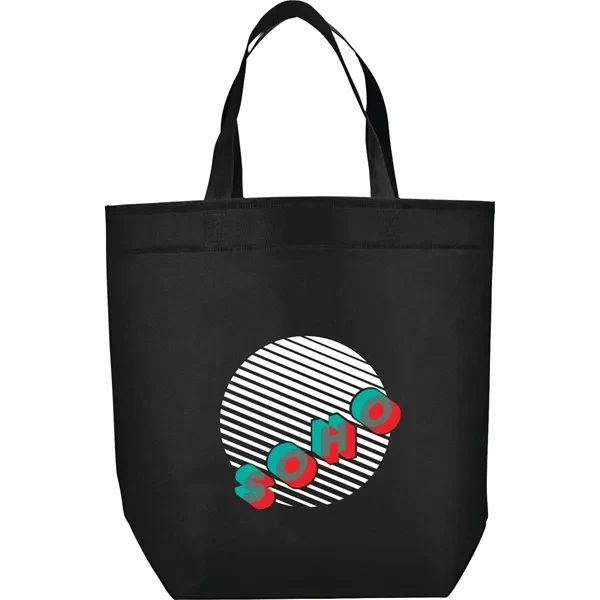
Non-woven is light and holds up well for regular shopping and event use, but it is not as long lived as canvas or rPET. Handles and seams are the weak points, so look for stitched or reinforced construction on bags meant for heavier loads. Heat sealed styles like the Challenger Non-Woven Shopper Tote are built for everyday carry. The product listing notes it is made from recyclable polypropylene (#5 plastic) and designed as a reusable alternative to plastic bags.
Decoration fit
Screen printing is the go-to method for non-woven and gives clean results for logos with one to a few spot colors. Polypropylene is sensitive to heat, so heat transfers need care and are not used on every style. Embroidery is generally not a fit, since the thin fabric can tear around the stitches. For photo quality, full color designs, look at laminated non-woven totes, which carry a printed film over the fabric. They look great, but the laminate adds a second material, which can make recycling harder.
Eco credentials and end of life
Non-woven polypropylene is lightweight and reusable, and some styles include recycled content; ask for GRS or a documented recycled percentage if that matters to you. At the end of its life, polypropylene is a #5 plastic. Many curbside programs do not accept fabric bags, so check local guidance or store drop-off options. Its honest pitch: it replaces single use bags at scale, as long as people keep reusing it.
Jute and recycled cotton, in brief
Jute. A coarse, natural plant fiber with a rustic look. Jute totes are sturdy and stiff, suit wine, farmers market and gift themes, and take bold screen prints well. Fine detail and small text are harder on the textured weave. Many jute bags have a laminated interior for structure, which is worth asking about if biodegradability is part of your message.
Recycled cotton. Made from cotton waste, often cutting room scraps, that is broken down and respun. It has a softer, slightly flecked look and keeps the natural feel of cotton while reusing material that already exists. Ask about GRS or RCS certification for the recycled content claim.
Eco claims and certifications: what to ask
Green language on bags ranges from precise to vague. These questions keep your messaging accurate.
Which part of the bag does the claim cover? Body fabric, handles, thread, trim and labels can all be different materials.
Is there a certification, and to which standard? GOTS or OCS for organic cotton, GRS or RCS for recycled content, OEKO-TEX Standard 100 for tested textiles.
What percentage is recycled or organic? "Contains recycled material" and "100% recycled" are not the same.
How should the bag be disposed of? Know the honest answer before you print "recyclable" on anything.
Is the decoration compatible with the eco message? Heavy laminates and mixed materials can work against an end of life story.
When in doubt, describe what the bag is made of. "Made from 300D recycled polyester" is clearer than "planet friendly."
Which eco-friendly tote bag fits your event or audience
Event or audience | Strongest fit | Why |
|---|---|---|
Client appreciation gift | Heavy canvas or organic cotton | Retail feel, embroidery friendly, long life |
Trade show or conference giveaway | Non-woven or light rPET | Light to carry and ship, takes a bold screen print |
Outdoor festival, 5K or sports event | rPET | Handles moisture and dirt, wipes clean |
Grocery or retail promotion | Non-woven or recycled cotton | Familiar shopping shape, everyday reuse |
Employee onboarding kit | Canvas or recycled cotton | Daily carry for lunch, laptop sleeve or gym gear |
Sustainability campaign or nonprofit | Organic cotton, recycled cotton or certified rPET | Claims can be backed by a recognized certification |
Wine, farm or harvest theme | Jute | Natural look that matches the product story |
Totes are not the only option either. For kits that are handed over rather than carried all day, our gift bags section has reusable styles that work well as packaging.
Illustrative scenarios
These are illustrative examples to show how the decision usually plays out, not specific client orders.
A regional healthcare conference. The planner needs bags for every attendee, and many will fly home. A non-woven tote with a one color screen print keeps the bag light and packable, and attendees reuse it for groceries afterward.
A brewery sponsoring a riverside summer series. Bags will get wet, sandy and stuffed with cans. A heathered rPET tote handles the conditions, and the brewery can say honestly that the fabric is made from recycled polyester.
A design agency thanking its top clients. A heavyweight canvas or organic cotton tote with a small embroidered logo feels like a gift rather than swag, and the certification gives the agency a true sustainability detail to mention in the card.
Caring for eco-friendly tote bags
Good care is the easiest way to make a bag last, and a longer life is the whole point of choosing an eco material.
Material | Washing | Drying and storage |
|---|---|---|
Canvas and cotton | Cold wash on gentle, inside out, or spot clean. Expect some shrinkage on untreated cotton. | Air dry. Do not iron directly over the print. |
Recycled PET | Wipe clean or hand wash in cool water with mild soap. | Air dry. Avoid high heat, which can damage polyester and prints. |
Non-woven | Wipe or spot clean only. Do not machine wash. | Air dry. No dryer or iron. Store flat or folded. |
Jute | Spot clean with a damp cloth. Do not soak. | Air dry away from direct heat. Keep dry to avoid mildew. |
How to choose, step by step
Start with the audience. Who receives the bag, and what will they carry in it next month?
Pick the material that matches that use. Gift and daily carry lean cotton or canvas; wet or active use leans rPET; high volume giveaways lean non-woven.
Match the decoration to the fabric. Embroidery for canvas, screen print for nearly everything, full color via transfer, sublimation or lamination where it fits.
Confirm the claim. Ask for the certification or recycled percentage before you write any eco copy.
Review a proof before production. Check logo size, color and placement on the actual bag.
Not sure which way to go? Call us at 888-200-8672 and tell us about your event, your audience and your date. We will narrow the eco-friendly tote bag options to a short list that fits. For more ideas beyond bags, our guide to eco-friendly promotional products in the USA covers drinkware, apparel and more.