A dental giveaway only works if it leaves the office and keeps working. A toothbrush that sheds bristles after a week does not remind anyone to book a recall. A plastic trinket that sits in a cupholder until collection day does not either.
This guide is for practice owners, office managers, and group marketers who need promotional products for dental offices that patients actually use. The goal is not a long idea list. It is a clear brief for the visit, the person walking out the door, and the work the item has to do between appointments.
If you buy merch for hospitals, clinics, or staff programs, start with our broader healthcare promotional products guide. This page stays on patient-facing dental giveaways.
What “gets used” actually means in a dental practice
Keep rate and use rate are not the same thing.
A fridge magnet can stay on the door for two years and never produce a booked visit if the phone number is wrong or the QR code fails. A travel brush can live in a gym bag and earn two impressions a day. A novelty tooth-shaped stress ball can sit in a drawer and still count as “kept.”
Before you pick a product, write one sentence:
This item should still be in the patient’s hands, car, or bathroom 30 days after the visit, and it should make the next appointment easier to book.
If that sentence does not fit the product, skip the product.
That standard matches what industry research keeps finding. PPAI’s 2016 consumer study found that 83% of recipients recalled at least one brand without prompts. When they were given options, about nine in 10 correctly recalled the branding. ASI’s 2026 Ad Impressions Study found that 78% of U.S. consumers would keep a promo item because it is useful. Those are general consumer findings, not dental-patient surveys. The useful takeaway still holds: utility first, logo second.
Match the giveaway to the visit, not the catalog
One bag for every patient is easy to order and easy to waste. Plan a few small programs instead of one mixed box.
1. New-patient welcome
Purpose: make the first visit feel finished, not transactional.
What belongs:
A soft-bristle adult toothbrush that feels like something you would use at home
Floss or flossers that match what the clinical team already recommends
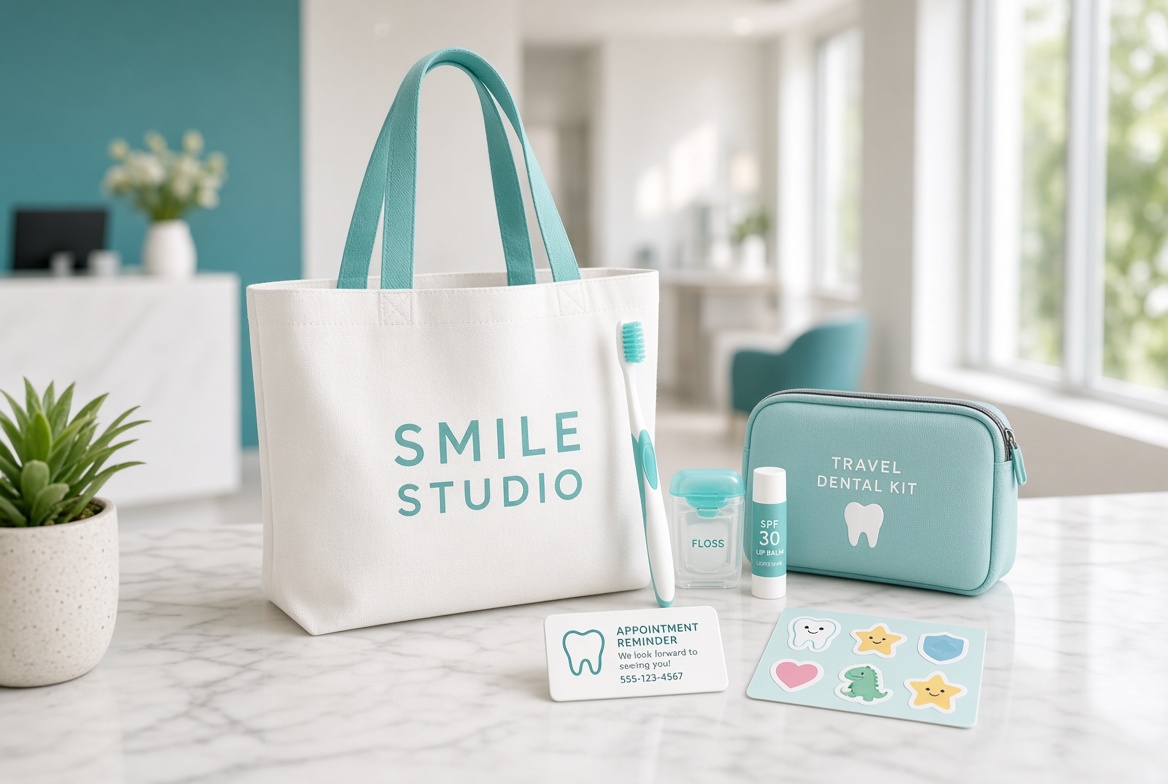
A small pouch or tote so the pieces leave together
One recall tool: magnet, appointment card, or QR to online booking
What does not belong:
Five extra novelties
Health or treatment claims on the product
A large tumbler the patient has to carry through the parking lot with kids in tow
Keep the kit short. Better construction. One clear next step.
2. Hygiene recall and routine cleanings
Purpose: put a usable brush and a booking reminder into the daily routine. Build it from personal care and hygiene kits.
This is where branded toothbrushes and floss earn their keep. The imprint should survive a wet counter and a medicine cabinet.
The American Dental Association recommends replacing a toothbrush every three to four months, or sooner if the bristles fray. Many practices hand out a new brush at each hygiene visit and still tell patients to replace it sooner if it wears out. Follow the practice’s own recall protocol. Do not write patient-facing copy that implies one brush should last until the next cleaning.
On a toothbrush handle, print the practice name plus one contact method. Phone or short URL, not both plus a QR code. Put the booking QR on the insert card or pouch, where it can stay readable.
If the budget is tight, buy a better brush and skip the extra novelty. See best promotional products under $1, $3, $5 and $10 for planning bands, then move one step above the cheapest option in the category.
3. Pediatric visits
Purpose: end the appointment on a good note and give the parent something useful. For pediatric visits, a soft stress ball with the practice logo is a low-cost extra for kids and nervous adults.
Kids want color and a prize. Parents want a brush that will get used tonight. Pair them.
Good mix:
Child-size soft brush
Sticker sheet or small prize
Parent card with the office number and a simple next-visit line
Optional travel case so the brush is not loose in a backpack
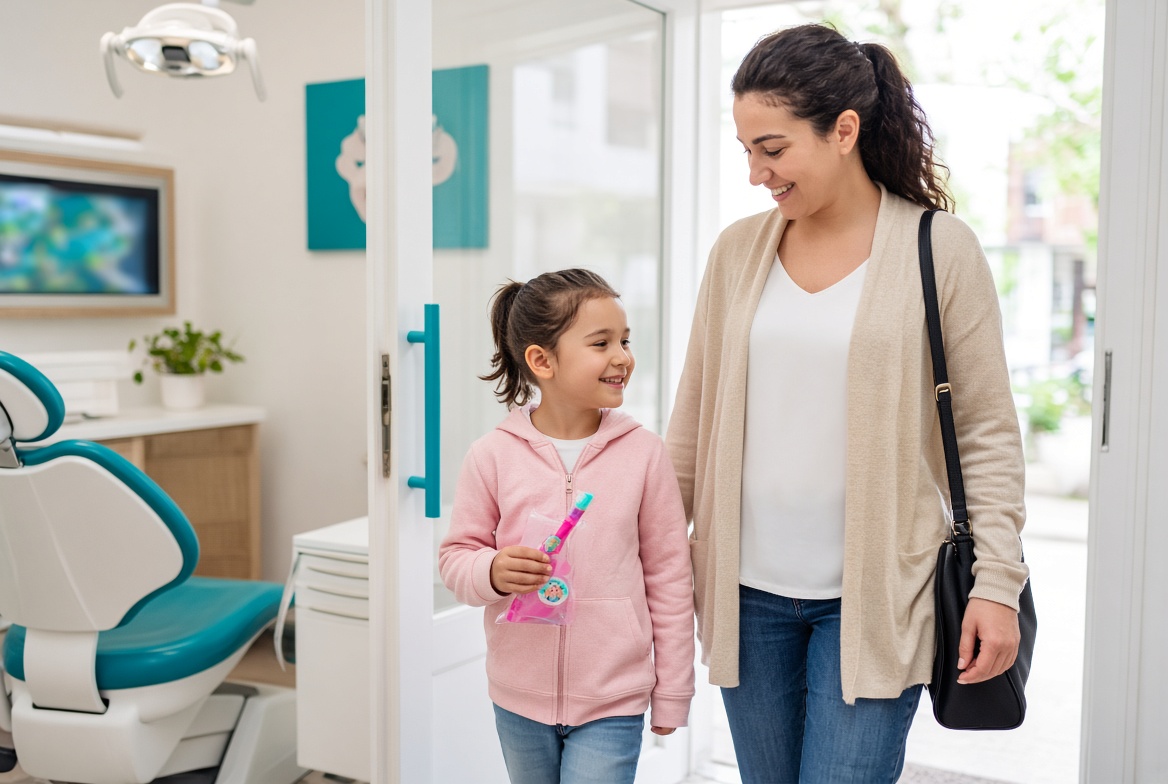
Skip packaging that looks like candy. Skip toys with small parts for younger kids. The photo below is the moment you are buying: the child leaves happy, and the parent still has a usable item.
4. Post-procedure and comfort
Purpose: send the patient home with items the treating team already approved.
Include only products the treating dental team approves for that patient’s aftercare instructions. Do not invent a comfort kit from a catalog photo.
Items practices often approve, when they fit the case:
Lip balm, if the team wants it after a longer visit
A compact ice pack only if construction is leak-safe and the card talks about comfort, not treatment
Travel-size hygiene items only when the aftercare sheet calls for them
Do not print treatment language on the product. “Feel better soon” belongs on a card. The item itself should stay ordinary and usable.
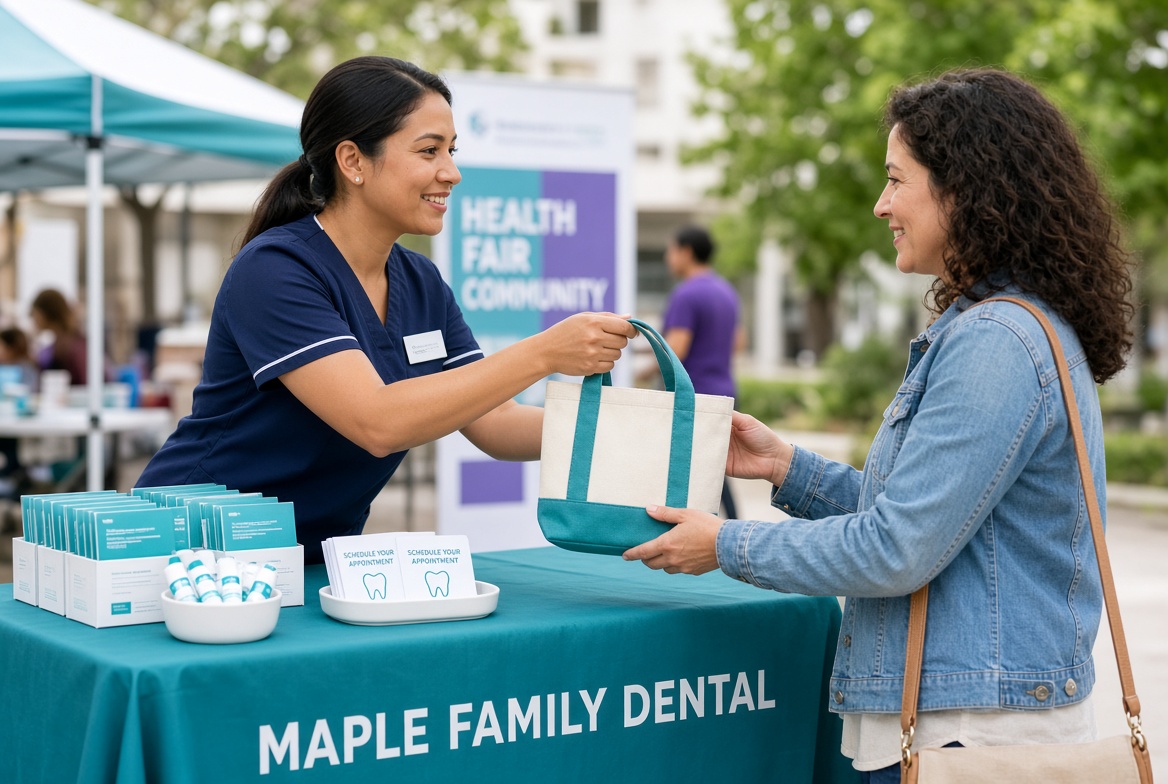
5. Community, schools, and health fairs
Purpose: help a local household remember the practice after the table is packed.
Handouts at a fair have a short attention span. Choose one useful item plus a booking path.
Strong fair items:
Compact travel kit
Lip balm
Small tote that can hold school papers
Pen that writes, with the URL printed large enough to read
If the event is a booth, borrow the handoff logic from trade show giveaways that increase leads. Do not empty the table into every passing bag.
The patient giveaways that earn a second look
Toothbrushes
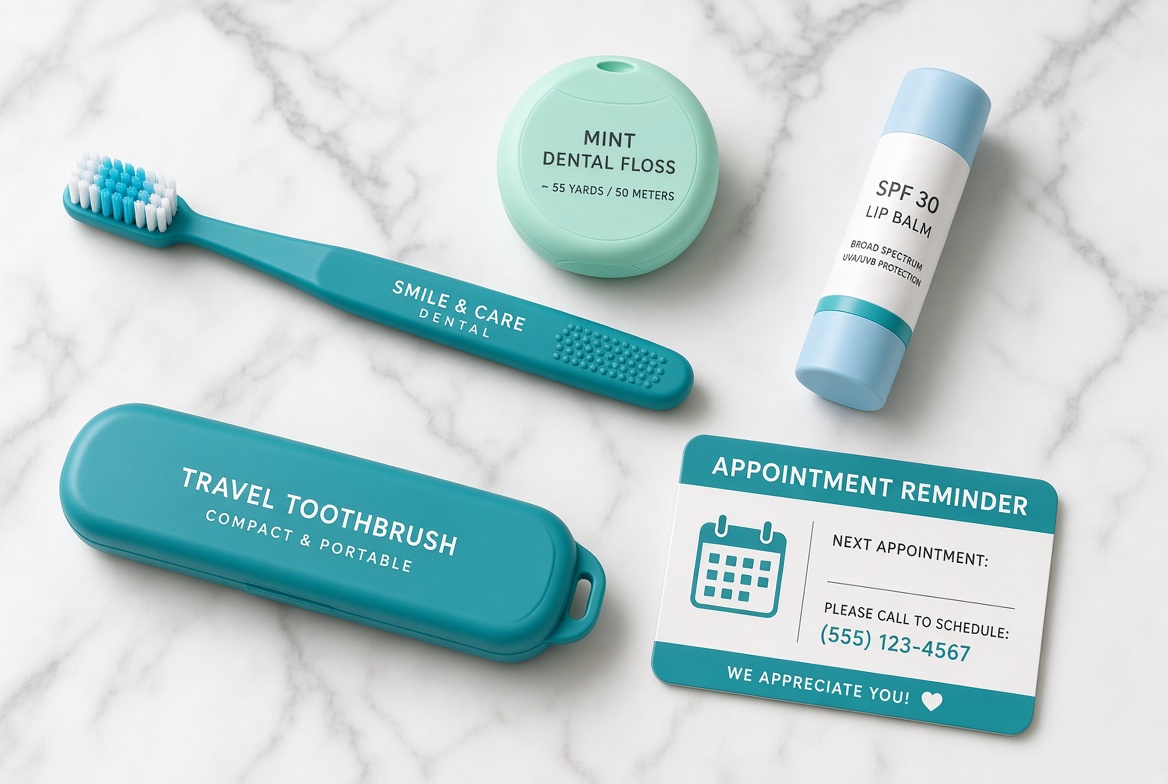
Still the core dental promotional product, and still easy to get wrong.
What to confirm:
Soft bristles for most adult bags
A handle people can hold with wet hands
An imprint area that stays readable after a few weeks on the counter
Made-in-USA options when the practice wants that story and the supplier can support it (Made in USA promotional products)
A brush that falls apart undercuts the care the patient just received.
Floss and flossers
These get used when they match the habit the clinical team is already teaching. Match the format to what you recommend in the chair. A branded container the patient will not open is just a small billboard.
Lip balm, including SPF
This is the sleeper item in dental offices. Long appointments dry people out. A tube lives in a pocket or console and gets used without a lecture. Print the practice name and one contact method. Keep the formula simple. Avoid medical copy. Browse lip balm tubes with a printed label.
Travel dental kits and pouches
These help commuters, parents, and anyone who stays overnight. A kit also keeps the smaller pieces together so they are not dumped in a drawer separately.
Browse bags and totes if you want the kit to travel as a bag instead of a vinyl sleeve. Toothbrushes, floss, lip balm, and assembled dental kits are sourced to the brief rather than sold as fixed catalog tiles on this site. Send the visit type and quantity with a quote request. For compact everyday items, use best promotional products under $1, $3, $5 and $10. For drinkware in a welcome or referral kit, use how to choose promotional drinkware.
Appointment magnets and reminder cards
These only work if the data is current. Put:
Practice name
One primary contact method
Website or booking QR
A write-in next-visit line, or a QR that lands on scheduling
If the QR breaks when you change vendors, the magnet becomes clutter.
Drinkware, used with restraint
A bottle can sit on a desk for months. It is the wrong default for every cleaning visit. Save drinkware for new-patient kits, referral thank-yous, or staff. Compare constructions in how to choose promotional drinkware.
Totes for kits and community days
A tote is the wrapper and the billboard. Patients carry groceries, library books, and kids’ gear in them. That is why bags show up so often in impression studies. ASI’s 2026/2027 Global Ad Impressions Study estimates about 4,900 lifetime impressions for promotional bags and reports that 84% of surveyed consumers would keep a promotional bag for at least a year. Those figures describe general U.S. consumer behavior, not a dental-patient sample. They still explain why a sturdy tote beats a loose handful of extras. See how branded merchandise supports loyalty if you need the retention argument for the owner. Browse bags and totes when the kit needs a carrier.
What to leave out of patient bags
These items keep showing up on idea lists. They rarely earn a second use at home.
Foam novelties with no second use
Plastic picks that snap
Pens that skip after a day (a decent pen is fine at the front desk)
Items marketed as antimicrobial, clinical, or “dental grade” without evidence that can support that claim
Staff-only apparel handed to patients
Oversized items that force a second trip to the car
Supplier documentation is not the same thing as a lawful health claim. The FTC’s health products guidance requires competent and reliable scientific evidence for health-related advertising, including copy on packaging and promotional materials. If you want eco options, choose items people will reuse, then confirm the claim. Start with eco-friendly promotional products in the USA. A leaf icon on a throwaway brush is not a sustainability program.
Imprint rules that keep the practice visible
Dental logos are often detailed. Handles, tubes, and magnets are small. That mismatch is why so many bags look muddy.
Keep the merch mark simple:
Practice name in a readable weight
One contact method on small items
Booking QR on the card, pouch, or magnet
One icon, not the full letterhead
Color contrast matters more than brand-book perfection. Teal on white works. Teal on teal does not.
Put a live booking path on the kit, not necessarily on every square inch of every piece. The giveaway should reduce front-desk phone tag, not create it.
Build the bag like a budget, not a wish list
Unit price is not program cost. Add decoration, setup, pouch, insert card, freight, and a small overage for damaged pieces.
Use the budget calculator before you lock a kit photo.
The ranges below are illustrative planning estimates, not quotes. Actual delivered cost depends on quantity, decoration method, color count, packaging, and freight.
Program | Planning estimate per patient, delivered | What that usually buys |
|---|---|---|
High-volume hygiene handout | About $1 to $3 | One good brush or floss plus a simple card |
Standard patient bag | About $3 to $7 | Brush, one companion item, pouch or small tote |
New-patient welcome | About $8 to $16 | Better kit, bag, recall tool |
Referral or VIP thank-you | About $15 to $30 | Drinkware or a tighter gift, not more loose extras |
Compare delivered cost, not the first catalog line. Setup and screen charges are explained here: promotional product setup fees.
If you need to prove the spend to an owner, use promotional products ROI. Count booked visits and referrals, not how many bags left the desk.
How to spec the order so it arrives as planned
Write the brief before anyone picks a color.
Include:
Who receives it (adult hygiene, kids, new patients, fair visitors)
Quantity by program, not one lump number
In-hands date for the first event or the next supply order
Logo file and the simplified merch version
Phone, URL, and QR destination
Any facility limits (no latex, no fragrance, no vendor marks in certain rooms)
Whether you need a physical sample of the bag or just a virtual proof
The sequence for timing, proofs, and freight is in how to order promotional products.
If the kit will be photographed, given to referring offices, or reordered for a year, look at a physical piece first. A virtual proof shows placement. It does not show bristle feel or whether a zipper catches. When you are choosing between a blank piece, a randomly printed piece, and a sample with your art, use spec sample vs random sample.
Rush is possible on some items. A full decorated kit with a spec sample is not a one-day job. See 24-hour rush promotional products before you promise the team a next-day bag.
A simple 90-day plan for a single-location practice
Do not wait for a six-month recall to decide whether the kit worked. Measure what you can see in the first quarter, then look at recall later.
Give each program its own tracking path. One shared QR mixes hygiene bags, new-patient kits, and community handouts into a single number you cannot act on.
Days 1 to 30
Run two programs only: hygiene handout and new-patient kit
Lock one toothbrush and one companion item
Approve a merch mark that fits both
Log how many kits leave the desk in each program
Print separate URLs or QR codes, for example /book/hygiene and /book/new-patient
Days 31 to 60
Add the pediatric prize without changing the adult bag
Add a third path for community or school events if you run them, for example /book/community
Ask the front desk to mention online booking when they hand the bag over
Track booking-page visits by path, not as one combined total
Days 61 to 90
Count appointments scheduled from each path
Ask returning patients whether they still have the brush, floss, or magnet
Drop anything that comes back unused
Reorder the two items that left the office and stayed in use
Assess six-month recall and hygiene reappointment after that window. The 90-day plan is for distribution and booking response, not for judging a full recall cycle.
Ready to spec a patient bag that gets used?
Tell us who walks out with it, how many you need, and the date it has to be on the counter. We will shortlist pieces that survive a bathroom counter, not just a product photo.